

Radiology and Imaging Sciences
Interventional Radiology

Academic Leadership and Innovation in Interventional Radiology

The Division of Interventional Radiology is committed to advancing the field through academic excellence, translational research and clinical innovation. Our faculty lead and collaborate on pioneering studies that enhance image-guided therapies across vascular, oncologic, hepatobiliary and musculoskeletal systems — driving improvements in procedural precision, patient outcomes and care efficiency.
Our research focuses on emerging technologies such as advanced embolization techniques, image-guided tumor ablation, minimally invasive vascular interventions and AI-assisted procedural planning. These innovations are shaping the future of interventional radiology and expanding its role in personalized, minimally invasive care.
Our clinical faculty are certified by the American Board of Radiology in both diagnostic radiology and vascular & interventional radiology, and recognized by the American Board of Medical Specialties. This dual certification reflects their advanced training and commitment to excellence in image-guided, minimally invasive procedures. As dedicated educators, they provide rigorous training and mentorship to medical students and residents, fostering clinical excellence and procedural expertise. Through hands-on learning, scholarly engagement and interdisciplinary collaboration, our team prepares trainees to become leaders in image-guided medicine, gaining proficiency in many modalities.
Advanced Procedures
GAE, also known as embolization of the knee, is a novel minimally invasive procedure providing immediate and long-term pain relief for patients with knee osteoarthritis (OA). GAE provides relief by dramatically reducing the blood flow to the lining of the knee.
PAD is a vascular condition commonly diagnosed in the legs or lower extremities. It involves the progressive narrowing or blockage of arteries responsible for transporting blood from the heart to the limbs. The primary underlying cause is atherosclerosis, a process in which fatty deposits, or plaque, accumulate along the arterial walls, impeding normal blood flow and potentially leading to pain, tissue damage or other serious complications. Treatments offered include:
- Angioplasty
- Stents
- Thrombolytic therapy
- Stent-grafts
Kyphoplasty is a minimally invasive procedure used to treat vertebral compression fractures. The procedure involves the injection of special cement into vertebrae — with the additional step of creating space for the treatment with a balloon-like device (balloon vertebroplasty). Kyphoplasty can restore a damaged vertebra’s height and may also relieve pain.
Our interventional radiology trainees learn to provide effective, minimally invasive treatments for a wide range of thyroid-related conditions, often serving as an alternative to surgical intervention. These conditions include hyperthyroidism, Hashimoto’s thyroiditis, thyroid tumors, thyroid cancer, thyroid disorders in women and postpartum thyroiditis.
Radiofrequency ablation (RFA) is a minimally invasive treatment option that provides an alternative to surgery for some patients with thyroid nodules. The procedure involves inserting a small needle electrode into the thyroid nodule using ultrasound guidance. Heat generated at the tip of the needle works to destroy the target tissue.
Uterine artery embolization (UAE) is an embolization procedure of uterine arteries to stop life- threatening postpartum bleeding, potentially preventing hysterectomy.
Uterine fibroid embolization (UFE) is an embolization procedure of uterine arteries to shrink painful, enlarged, benign tumors in the uterus.
Trainees also gain experience in treating other conditions.
Venous disease is a common vascular disorder involving high pressure buildup in the veins. Commonly treated venous diseases include:
- Blood clots
- Deep vein thrombosis (DVT)
- Superficial thrombophlebitis
- Chronic venous insufficiency
- Varicose and spider veins
- Venous ulcers
- Arteriovenous fistulas
Hepatocellular carcinoma (HCC) is a type of liver cancer. It starts in the main type of liver cell, which is called a hepatocyte.
Renal cell carcinoma (RCC) is the most common type of kidney cancer. RCC forms in tiny tubes inside the kidneys called tubules, which direct water and nutrients to the bloodstream while filtering waste through the urine. Up to 85% of kidney cancers are RCC.
Metastatic colorectal cancer is an advanced-stage malignancy that originated in the colon and has traveled to other areas of the body. This is also referred to as metastatic (stage IV) colorectal cancer.
Residents, fellows and medical students benefit from:
- Training in procedures such as NanoKnife® (irreversible electroporation), prostate arterial embolization for benign prostatic hyperplasia and Yttrium-90 (Y90) radioembolization for metastatic liver disease
- Opportunities in research and protocol development to ensure patients have access to the latest advancements in interventional radiology
Division Chief
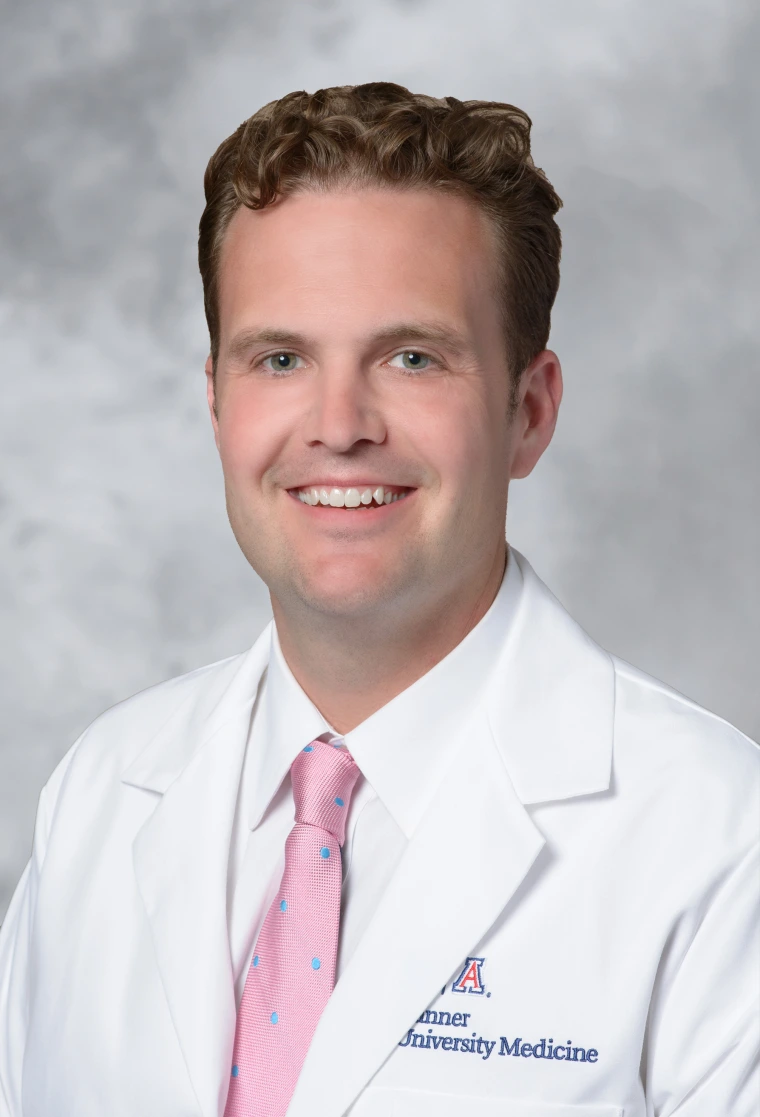
Shamar Young, MD
Clinical Specialties
Division Faculty

Artyom Abramyan, DO

Daniel Goldberg, MD

Jack Hannallah, MD, MPH, MBA

Lucas Struycken, MD

Ilaria Vittoria De Martini, MD

Gregory Woodhead, MD, PhD
Advanced Practice Providers

Alexis Loyola, PA-C
Academic Excellence
Our interventional radiology residents are prepared to become leaders in vascular and interventional radiology. Our programs are enriched by a high-volume and complex case mix from diverse patient populations including a broad range of pathologies. This dynamic environment fosters clinical excellence, cultural competence and a deep understanding of multidisciplinary care.


Banner Health Appointments
Clinical Facilities and Patient Care Services
Learn More
Banner – University Medicine Advanced Imaging
4291 N. Campbell Ave.
Tucson, AZ 85719
520-694-9640
Banner – University Medical Center Tucson
1625 N. Campbell Ave.
Tucson, AZ 85719
520-694-0111
Banner – University Medical Center South
2800 E. Ajo Way
Tucson, AZ 85713
520-874-2000
University of Arizona Cancer Center
3838 N. Campbell Ave.
Tucson, AZ 85719
520-874-2000